Letter from Doctors Cédric Kron and Philippe LEBAR following the decision of the AFSSAPS (French Health Products Safety Agency) excluding cosmetic breast augmentation as an indication for injectable filler products (Macrolane).
Paris,
September 6, 2011
Subject: AFSSAPS (French Health Products Safety Agency) decision excluding cosmetic breast augmentation as an indication for injectable filler products (Macrolane)
Dear Madam,
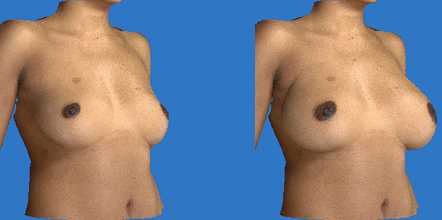
The AFSSAPS has decided to exclude cosmetic breast augmentation as an indication for injectable filler products such as hyaluronic acid (Macrolane). This decision was prompted by the results of a recent study, which highlighted risks of disruption to imaging scans and difficulties in palpating the breasts during clinical examinations. According to the study, these risks are increased with repeated injections.
The consequences of these risks include a possible disruption to breast cancer screening.
This decision applies the precautionary principle very strictly. As the AFSSAPS itself acknowledges, no case in the clinical studies, the literature, or Macrolane's post-approval surveillance database has revealed any new adverse effect or risk since Macrolane was launched on the market in 2008. Thanks to its effectiveness and good tolerability, Macrolane has brought great satisfaction to more than 15,000 patients worldwide.
Regarding the specific case of patients who have been treated by me:
You should continue your clinical monitoring at the frequency I recommended based on the timing of your injection with me. Please note that should a mammogram and/or breast ultrasound be needed, I recommend having it performed by Dr LEBAR, a radiologist who co-authored this letter with me and who runs a leading radiology practice in breast cancer screening. We have worked together from the very beginning on the clinical examination, screening and analysis of mammograms and ultrasounds for patients treated with Macrolane, so Dr LEBAR has extensive experience reading these images. This poses no difficulty for the diagnostic screening of breast cancer when combining mammography and breast ultrasound.
Please also note that Macrolane is fully reabsorbed within 18 to 24 months, after which you will be able to undergo mammograms and ultrasounds in the same way as other women.
In conclusion, if you have any concerns, I recommend a clinical examination with me and a mammogram and/or ultrasound with Dr LEBAR. Please note, however, that the AFSSAPS confirms that women who have had breast augmentation with Macrolane-type injectable products do not require any particular medical follow-up beyond what I had already planned for you. They should continue to attend the monitoring appointments scheduled in this way. If an ultrasound or MRI is needed, it is important to inform the radiologist of the date of your injection.
You can also find additional information on the AFSSAPS website, and I will list on my own website the links that give you direct access to information on this topic.
N.B.: Today, for breast augmentation treatment, the only option available to you is augmentation with breast implants (breast prostheses).
Indeed, fat grafting is also not recommended because, while it does not currently interfere with screening, fat cells release growth factors, which could potentially accelerate the development of breast cancer.
Dr LEBAR and Dr KRON remain available for any further information and send you their best regards.
Dr Cédric KRON
Plastic Surgeon
Phone: +33 1 45 62 85 00
Dr Philippe LEBAR
Radiologist
199, rue de Grenelle 75007 Paris
Phone: +33 1 47 05 51 87