
Cosmetic surgery procedures can be performed under local anesthesia. Facial rejuvenation procedures, breast augmentations or liposuctions can be performed without general anesthesia. Cosmetic surgery techniques under local anesthesia are reliable and provide natural, lasting results. It should nevertheless be noted that these procedures do not always address the same indications as those performed under general anesthesia.
Why choose cosmetic surgery under local anesthesia?
General anesthesia and local anesthesia
Anesthesia is used in cosmetic surgery to perform the procedure under the best safety conditions, to eliminate pain during the operation and to reduce post-operative pain.
General anesthesia is a state comparable to sleep, produced by administering medication through an IV or by inhalation. General anesthesia causes loss of consciousness during the procedure.
Local anesthesia, or more precisely locoregional anesthesia, numbs only the part of the body involved in the procedure through an injection of a local anesthetic. The patient remains conscious throughout the operation but feels no pain.
General anesthesia: a reliable technique, but one with risks and drawbacks
The general anesthesia techniques used in cosmetic surgery are particularly reliable. Serious risks, such as an allergy or a cardiac or pulmonary problem, are extremely rare. The anesthesiologist takes every precaution to prevent and optimally manage these complications, since even if one of these complications were to occur, you are, by definition, already in a resuscitation setting for it to be managed by your anesthesiologist-resuscitator (the actual title of their specialty).
While serious risks are fortunately exceptional, patients should consider the drawbacks and possible side effects of general anesthesia:
- General anesthesia can cause nausea and vomiting upon waking. These drawbacks are fairly common, although newer anesthetic drugs help limit them. This is the case, for example, with the general anesthesia protocol developed by Dr Kron and his anesthesiologist, notably in laryngeal mask general anesthesia combined with local anesthesia.
- If a breathing device is inserted into the trachea during the operation, you may experience a sore throat or difficulty swallowing for a few days. Here too, this risk is reduced by using a laryngeal mask rather than an oro-tracheal tube.
- Prolonged positioning on the operating table can cause numbness, which disappears after a few hours.
Serious risks, particularly the risk of allergy, are even rarer with local anesthesia. Post-operative discomfort is also much lower, even though it is normal to experience a loss of sensation and tingling in the anesthetized area. Local anesthesia also allows for faster overall post-operative recovery.
Being conscious during the operation can be stressful for some patients. During local anesthesia, the patient is immersed in the atmosphere of the operating room and may hear the sound of the instruments as well as conversations among the surgical team. Headphones playing music can be used to mask the sounds of the operating room.
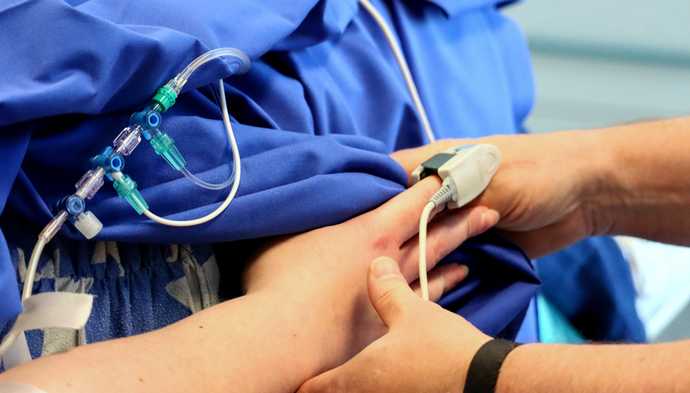
General or local anesthesia: a personal, informed choice
The choice not to have general anesthesia is highly personal. It may be explained by a fear of the risks and side effects of general anesthesia. It may also be explained by health issues for which general anesthesia is contraindicated. Sometimes, it is simply related to the "stress" caused by the loss of self-control.
During the initial consultation, the cosmetic surgeon will explain in detail the various treatment options that can meet your aesthetic needs. They will answer all your questions and inform you of the limitations and risks of the various techniques, even though these are fortunately exceptional.
The decision to undergo surgery and to have general, local or combined anesthesia must be made with full knowledge of the facts.
Advantages of local anesthesia:
- Local anesthesia allows for a faster recovery than general anesthesia. Patients can quickly return home and resume their daily activities after the operation.
- The use of long-acting anesthetics helps prevent post-operative pain.
- Post-operative discomfort can be reduced.
In practice, Dr Kron and his anesthesiologist have developed an anesthesia protocol that has been internationally recognized since 2008. This protocol combines general anesthesia with a laryngeal mask (performed by the anesthesiologist) and local anesthesia, performed by the surgeon once you are asleep. It minimizes the risks and discomfort associated with each type of anesthesia performed in isolation.
Which cosmetic surgery procedures can be performed without general anesthesia?
Procedures that can be performed under local anesthesia:
- All facial rejuvenation and facelift techniques. This is sometimes referred to as a "mini-lift" (see below), but deep face lifting (or deep plane facelift) can also be performed under local anesthesia,
- Blepharoplasty (eyelid surgery) and Asian blepharoplasty
- Rhinoplasty of the nasal tip,
- Otoplasty (prominent ear surgery),
- Liposuction localized to limited areas and volumes: this is known as "gentle liposuction" (see below),
- Arm lift (inner arm lift),
- Localized tummy tuck,
- Pre-muscular breast augmentation, when the implants are placed in front of the muscle (see below),
- Breast augmentation with Motiva Preserve, a technique combining latest-generation implants with minimally invasive placement,
- Breast lift: breast surgery to correct ptosis,
- Breast reduction, in young patients with no risk factors,
- Dermatological surgery techniques, notably the excision of moles (nevi).
Specifics of cosmetic surgery procedures performed under local anesthesia:
Cosmetic surgery under local anesthesia is not possible for all indications. Indeed, the amount of anesthetic that can be administered is calculated based on the patient's weight. Local anesthesia is not always sufficient to treat extensive or deep areas, nor to perform long procedures while guaranteeing the patient's comfort and safety. Local anesthesia can therefore be considered for lighter procedures than those performed under general anesthesia.
It should be noted that the patient may hear and partially feel the operation, even though no pain is felt. The atmosphere of the operating room can be stressful for some patients, who may find general anesthesia more comfortable.

Mini-lift: Facelift under local anesthesia
There are surgical facial rejuvenation techniques performed under local anesthesia sometimes referred to as a "mini-lift" or "mini-facelift." Compared to a more conventional facelift such as the LVPA, these are more localized, or purely subcutaneous, facelifts, even though an LVPA facelift can also be performed entirely under local anesthesia.
Indications for a mini-facelift
A mini-lift is indicated for patients who wish to moderately correct facial skin laxity. A mini-lift can involve the facial oval and/or the neck.
A mini-lift addresses the first signs of facial tissue sagging (early wrinkles, moderate jowls, an early double chin). It is therefore indicated for younger patients, between 35 and 55 years old, who have moderate laxity of the facial oval.
A mini-lift corrects the first signs of facial aging and offers a preventive effect by delaying the most visible signs of facial aging. A mini-facelift can delay the point at which a conventional cervicofacial facelift may become necessary.
Advantages of the mini-lift:
- The operation is faster (about 1 hour). It is possible to leave the clinic quickly after the procedure.
- Unlike conventional facelifts, only the skin is undermined during the operation, which noticeably reduces post-operative swelling.
- The result is visible more quickly, since post-operative swelling is less significant.
Medical alternatives to the mini-lift
For patients who do not wish to undergo surgery, there are minimally invasive aesthetic medicine techniques that provide facial rejuvenation: Botox or hyaluronic acid injections, combined peels, laser or radiofrequency treatments.
Dr Kron notably offers the Keybody-Skin protocol, which combines the latest advances in aesthetic medicine to achieve very significant results on facial skin.
> Learn more about the LVPA facelift

Breast augmentation under local anesthesia
It is possible to have breast implants placed as part of a procedure under local anesthesia. It should nevertheless be noted that not all surgical options are possible due to the constraints associated with local anesthesia.
Implant position:
The main constraint concerns the dose of local anesthetic that can be safely administered. Undermining the muscle requires a longer operating time as well as a greater amount of anesthetic. For the patient's comfort, only pre-muscular augmentations (where the implant is placed in front of the muscle) are performed under local anesthesia.
Volume achieved with breast augmentation under local anesthesia
The implants must also be of a small to medium volume relative to the size of the breast and the patient's build, in order to properly respect her anatomy.
If you wish to achieve a large volume, it is preferable to consider breast augmentation under general anesthesia. Indeed, a longer procedure, involving a greater amount of local anesthetic, is needed to create a pocket large enough to accommodate a large-volume implant.
Breast augmentation with Motiva Preserve
Combining latest-generation implants with minimally invasive placement technology, Motiva Preserve allows breast augmentation under local anesthesia, with invisible scars and an almost immediate return to daily activities.
With Motiva Preserve, the scars caused by implant placement are nearly invisible. The implant can be inserted through an incision of barely 2 to 3 cm, discreetly hidden in the inframammary fold. Based on our knowledge, Motiva Preserve is the breast augmentation technique that offers the most discreet scars.
Breast augmentation with Motiva Preserve is performed under local anesthesia, allowing for a quick discharge from the clinic. A return to daily activities is possible within hours of the operation.
> Learn more about breast augmentation with implants
> Learn more about Motiva Preserve

Gentle liposuction: liposuction under local anesthesia
The term "gentle liposuction" refers to liposuction performed under local anesthesia. As Dr Kron puts it, "my liposuctions are, however, just as gentle under general anesthesia."
The principle of gentle liposuction is identical to traditional liposuction: through small incisions, rounded-tip cannulas connected to a closed, negative-pressure circuit suction out fat cells in order to remove localized excess fat.
What are the differences between conventional liposuction and gentle liposuction?
The cannulas used are generally smaller for gentle liposuction. The suction force used to remove fat is also lower.
Beyond the type of anesthesia used during the procedure, it should be considered that gentle liposuction will not remove the same amount of fat. The amount of anesthetic that can be used locally will limit the amount of fat that can be removed as well as the depth of treatment, while ensuring the patient's comfort and safety.
Gentle liposuction is therefore not suitable for patients who wish to remove a large amount of fat or who wish to remove deep fat deposits. In such cases, several sessions, or even liposuction under general anesthesia, should be considered.
Gentle liposuction is indicated for patients who wish to treat moderate, localized excess fat.
Which parts of the body can be treated with gentle liposuction?
- Excess fat on the face: double chin and neck,
- Localized abdominal fat, particularly around the navel,
- Saddlebags and love handles on the hips,
- The buttocks,
- The outer and inner thighs,
- The inside of the knees.
Gentle liposuction can be combined with fat grafting during the same procedure.
> Learn more about liposuction
In conclusion
Local anesthesia can be performed on its own or with light sedation from the anesthesiologist: this is known as local anesthesia assisted by neuroleptanalgesia, so that the patient is semi-conscious, less aware of what is happening, and well relaxed.
The protocol most recommended by Dr Kron is general anesthesia with a laryngeal mask combined with local anesthesia. This protocol has been shown, internationally, to offer the best benefit-risk ratio for a surgical procedure by limiting the drawbacks associated with each type of anesthesia while combining their respective advantages.
But, once again, alternative treatments are possible and will be discussed during your consultation.
