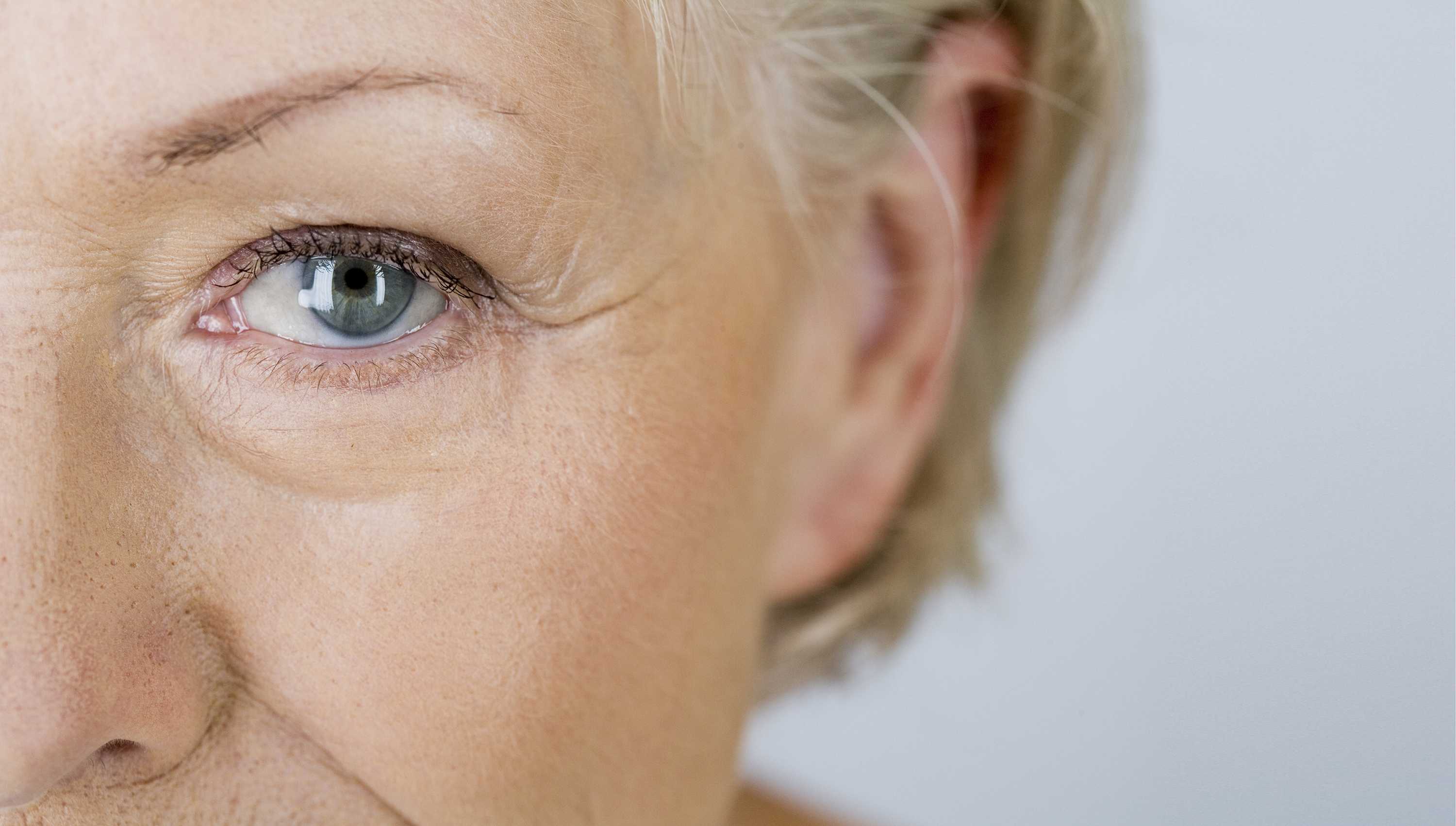
A cheek lift (or centrofacial lift) is a surgical procedure that beautifies the eyes and rejuvenates the central part of the face. Unlike a lower blepharoplasty, a cheek lift does not act solely on the lower eyelids and hollow or puffy circles, but on the entire central third of the face (cheekbones, nasolabial folds). Its goal is to restore the original harmony of the center of the face in a natural and lasting way.
What is a cheek lift?
The term "facelift" is often used generally to refer to cosmetic surgery procedures that correct facial aging and tissue sagging. There isn't, however, a single facelift technique, but rather several techniques suited to different indications.
The different types of facelifts
The two main techniques are the cervico-facial lift and the centrofacial lift (cheek lift).
The cervico-facial lift corrects skin and muscle laxity in the face and neck, extending up to the temples. Dr. Kron performs the cervico-facial lift using the LVPA facelift technique (Long Vertical Deep Anterior), a vertical deep plane facelift. This technique achieves a very significant, lasting result, with simple recovery and virtually invisible scars.
A skin and muscle platysmaplasty can be considered a neck lift, as its goal is to fight the signs of time by redraping the sagging skin and muscles of the neck.
The cheek lift, meanwhile, acts on the mid-third of the face: the cheekbones, the hollow of the under-eye circles and the lower eyelids.
For which patients?
A cheek lift does not transform facial features, but corrects sagging of the central third of the face caused by aging and tissue laxity.
A cheek lift is indicated for patients who wish to:
- Remove excess skin on the lower eyelids,
- Correct particularly pronounced hollow under-eye circles,
- Remove excess fat from under-eye bags,
- Lift their cheekbones,
- Reduce the nasolabial folds (below the nose),
- Lift the infra-palpebral grooves (the line under the eyes).
Indication for patients who wish to correct hollow under-eye circles:
A cheek lift repositions the cheekbones, lifts the nasolabial fold and treats under-eye circles. The cheek lift can treat both hollow circles (caused by fat loss under the eye and tissue laxity) and puffy circles (caused by the sagging of this fat along with skin laxity).
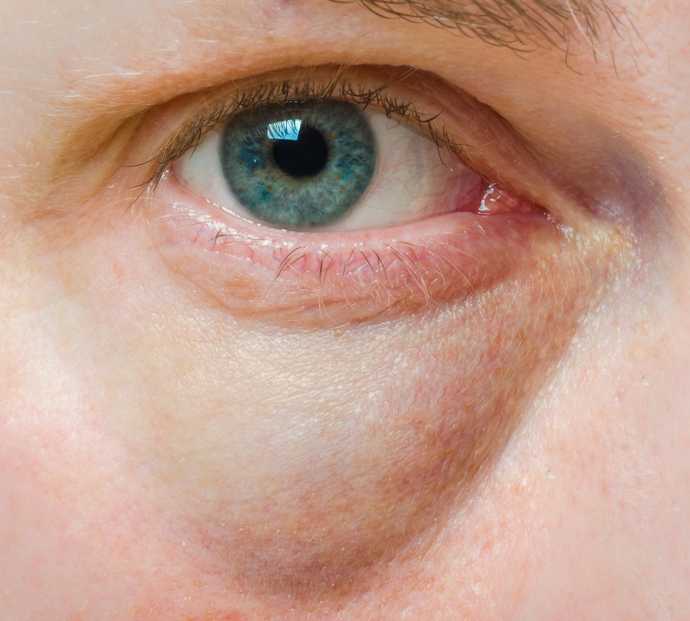
A cheek lift is indicated for patients who present hollow circles and who wish to treat them in the same operative session as cheekbone sagging.
If the patient only wishes to correct hollow circles, under-eye circle lipofilling, lower blepharoplasty or hollow circle filling with hyaluronic acid injections can be considered as alternative treatments.
What happens during a cheek lift
Anesthesia
A cheek lift is generally performed under assisted local anesthesia or general anesthesia with a laryngeal mask.
The surgical technique of a cheek lift:
A cheek lift involves two incisions that allow for undermining and then redraping of the skin.
- The first incision is made at the lower eyelid. Placed just under the lashes, this incision extends into the crow's feet to remain as discreet as possible.
- The second incision is made in the hair-bearing part of the temple.
- Sometimes Dr. Kron uses only the lift incision, without a scar under the eyelids.
- The surgeon then performs a "deep" undermining of the cheekbone area.
- A vertical suspension of the cheekbones is performed.
- The excess eyelid skin is removed once the new position of the cheekbones has been established.
Recovery after a cheek lift
The procedure is most often performed on an outpatient basis (leaving the clinic the same day as the procedure). When other surgical procedures are combined with it, an overnight hospital stay may be necessary.
Pain:
Post-operative pain from a cheek lift is moderate and can be managed with simple painkillers.
Recovery is mainly marked by the appearance of edema (swelling) and bruising in the treated area. Their extent and duration vary greatly from one patient to another and usually resolve within 2-3 weeks. In 30% of cases, however, malar edema can persist longer, up to 3-4 months.
Stitches are generally removed around day 4 after the procedure.
The signs of the procedure gradually fade, allowing a return to normal daily life after a few days (5 to 15 days depending on the individual and any combined procedures).
Scars from a cheek lift:
Scars may remain a bit pink during the first few weeks, but eyelid makeup can usually be worn quickly (typically from day 7). Slight firmness in the areas that were undermined may persist for a few months, but this is not noticeable to others.
The scars from the incision are barely visible, as they are hidden under the lashes and in the hair.
The procedure carries no particular risks, but the risks inherent to any surgical procedure should nonetheless be considered (see Risks in surgery).
Results of a cheek lift on hollow under-eye circles
The result of a cheek lift can be assessed once the signs of the procedure have faded, after a few weeks.
The result can be considered final after 6 to 12 months.
A cheek lift achieves a harmonious and natural result through its vertical pull of the tissues toward the top of the cheekbones.
It corrects, in the same operative session, hollow under-eye circles (by repositioning a fat volume along the lower orbital rim), sagging cheekbones, as well as deepening nasolabial folds.
In summary: the cheek lift
- Indication: Correction of laxity in the middle third of the face (hollow under-eye circles, cheekbones, nasolabial folds)
- Result: Natural after 6 to 8 weeks - Final after 3 to 6 months
- Anesthesia: General with laryngeal mask (lighter) or assisted local anesthesia
- Pain: 2 to 3/10
- Scars: Barely visible (hidden under the lashes and in the hair)
- Recovery: Between 7 and 21 days
- Return to sport: 2-3 weeks after the procedure
- Operative time: Between one and two hours
- Hospitalization: Outpatient (discharge 4-6 hours after the procedure). Overnight hospitalization sometimes needed if combined with other surgical procedures.
