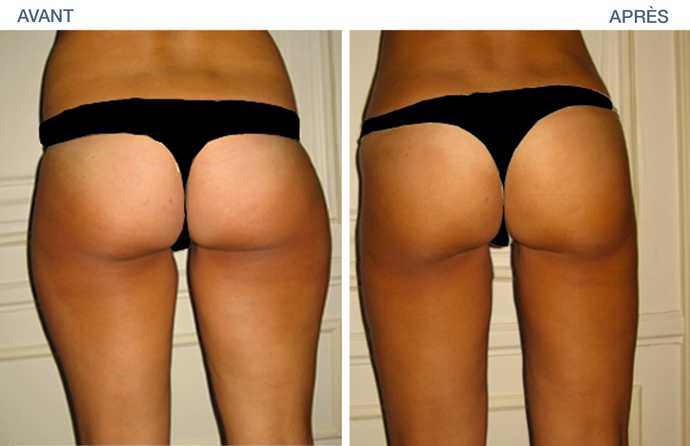
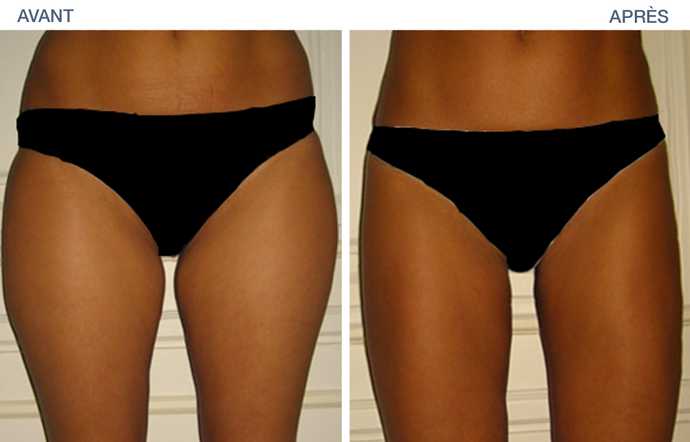
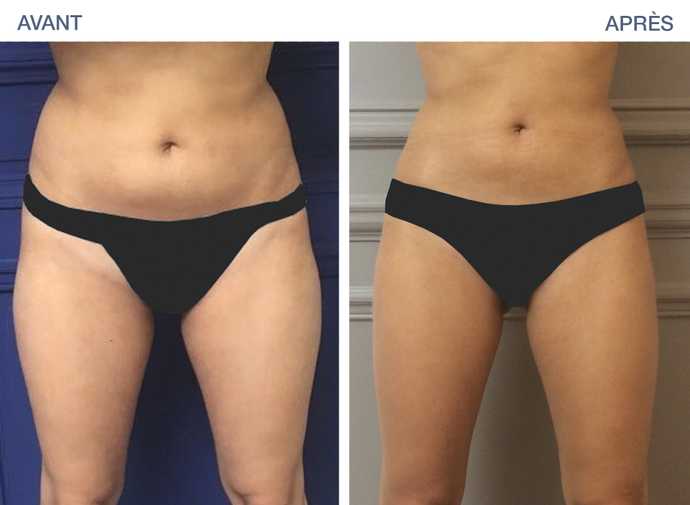
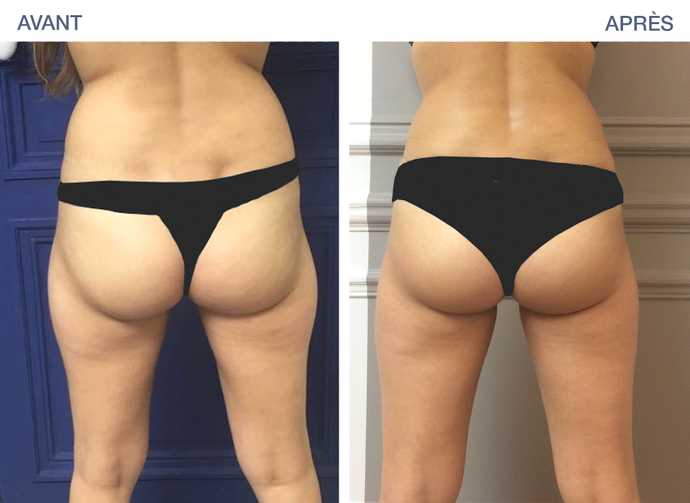
The term "saddlebags" refers to fat deposits located around the pelvis (hips, lower abdomen, thighs, buttocks). Often a source of self-consciousness, saddlebags are explained by hormonal and physiological factors, which is why they can be difficult to get rid of. Liposuction (or lipoplasty) of the saddlebags and hips is a cosmetic surgery treatment indicated for women who wish to remove their saddlebags.
What are saddlebags?
The term "saddlebags" refers to subcutaneous fat deposits located around the pelvis, in the lower and outer part of the buttocks, around the hips and the upper outer part of the thighs. Saddlebags appear when the body excessively stores fat cells in this region.
Causes of saddlebags
Contrary to popular belief, the appearance of saddlebags is not necessarily linked to being overweight or to poor lifestyle habits (even though these are aggravating factors). Slim, active women can also be affected and struggle to get rid of them.
From a young age, pelvic fat tissue appears in women and develops with hormonal changes (puberty, pregnancy). From puberty onward, the ovaries produce a hormone (folliculin) that promotes weight gain around the pelvis. This is a natural physiological mechanism in women: the body stores fat to have all the energy needed in case of pregnancy.
Added to these physiological causes are hereditary factors. Some women are more affected than others due to a genetic makeup that promotes greater fat storage than in other women.
How to naturally lose saddlebags?
A healthy lifestyle that combines a balanced diet and regular physical activity limits the risk of developing saddlebags.
If the fat stored around the pelvis is already significant, it can be reduced with a low-fat, low-sugar diet as well as regular exercise. Endurance sports that burn fat and tone the muscles of the lower body (such as jogging, swimming, water aerobics) generally help slim the pelvis.
Electrical muscle stimulation (EMS) sessions can achieve very good results on the silhouette by toning the body's muscles. One to two XBody sessions per week for a few weeks achieve very significant results, comparable to several months of intensive sports training.
Why is it so difficult to lose saddlebags?
Due to their physiological origin (fat storage by the body), saddlebags are particularly difficult to get rid of, even with a strict diet and regular physical activity.
During physical exertion, the body tends to draw first on fat stored in the upper part of the body when it needs energy. Saddlebags are therefore an area where particularly stubborn excess fat accumulates, despite significant effort.
Liposuction and medical fat-removal techniques (such as Keybody-Lipo and cryolipolysis with CoolSculpting) are treatments particularly indicated for women who struggle to lose their saddlebags.
Principle of saddlebags liposuction
Liposuction (also called lipoplasty) is a cosmetic surgery treatment that permanently removes localized fat deposits. It is not a weight-loss method, but a technique for reshaping contours aimed at removing fat deposits that are difficult to lose through diet or exercise.
What is liposuction?
Liposuction involves inserting rounded-tip cannulas, perforated with several openings at their end, through fine skin incisions (2 to 5 mm). The cannulas are connected to a closed circuit under negative pressure that suctions fat cells, whether deep or superficial, out of the body.
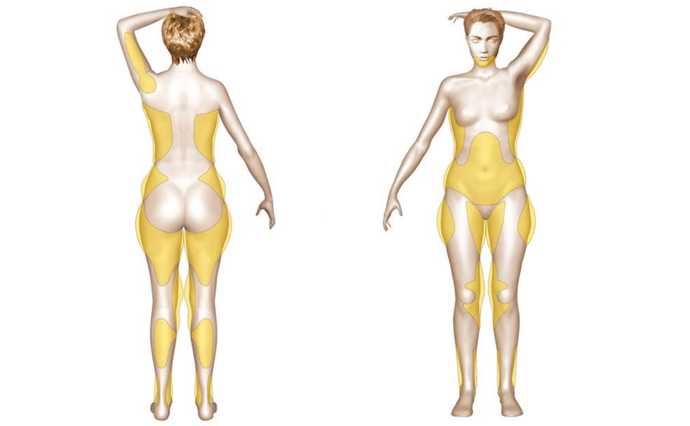
What happens during the procedure:
Liposuction is performed at a clinic, either as an outpatient procedure or with an overnight stay (depending on the extent of the treated area). The procedure generally lasts between 30 minutes and 2 hours.
Liposuction is performed under general, loco-regional (spinal, epidural), or assisted local anesthesia (neuroleptanalgesia) depending on the extent of the treated area.
Learn more about liposuction
Results of saddlebags liposuction
A first impression of the result achieved by liposuction is available immediately after the procedure, but post-operative edema will then mask the result for a few days.
The result of saddlebags liposuction then appears gradually over the following months, as the skin retracts and adapts to the new contour of the silhouette. After 5-6 months, the result of the liposuction can be considered final.
The result is lasting, since the excess fat cells are permanently removed. Of course, an overly rich diet and poor lifestyle habits risk causing fat deposits to reappear. It should be noted, however, that the "unsightly" fat cells have been removed, resulting in a more harmonious silhouette even in case of weight gain.
Recovery after liposuction:
Recovery after saddlebags liposuction is generally simple. It is marked by the appearance of post-operative edema (swelling of the treated area) and some bruising. These effects naturally disappear after a few days.
Moderate pain is felt, similar to the soreness caused by intense sports training. Painkillers easily relieve this pain.
Liposuction is a cosmetic surgery procedure that carries little risk. The quality of the result depends on the quality of the patient's skin. The surgeon will be able to tell you during the consultation whether you can expect a reduction or removal of your saddlebags.
Post-operative physiotherapy and lymphatic drainage sessions limit the risk of poor healing and speed up recovery.
> Read the detailed risks in the SOFCPRE information sheet
Medical alternatives for removing saddlebags
For a long time, liposuction was the only technique that could permanently remove excess fat such as saddlebags fat. Now, there are medical (non-surgical) techniques that achieve similar results, without the discomforts and risks inherent to any surgical procedure: hospitalization, anesthesia or scars (even though the skin often heals well from the mini-incisions made during saddlebags liposuction).
To our knowledge, two medical techniques have proven effective for significantly and durably treating saddlebags: Keybody-Lipo and cryolipolysis with Coolsculpting.
Several sessions are generally needed to achieve optimal slimming of the saddlebags, similar to what can be achieved with liposuction.
Dr. Cédric Kron's practice offers a (free) body-contouring diagnostic consultation to determine which type of fat-removal treatment is suited to your body shape and expectations.
> Which treatment to eliminate fat?
Before – after: Saddlebags liposuction