
A revision rhinoplasty is a redo surgical procedure that corrects the appearance of the nose after a first cosmetic nose surgery. As a rule, this procedure is related to a patient's dissatisfaction with the result of a previous procedure. A revision rhinoplasty better aligns the result with the patient's expectations, refines the result achieved, or corrects more or less significant flaws.
What is a revision rhinoplasty?
A revision rhinoplasty is a redo cosmetic nose surgery procedure that corrects flaws identified jointly by the patient and surgeon following at least one prior procedure. A revision rhinoplasty can correct a nose that has become too thin or crooked, a bump in the profile, or a tip that has become droopy, asymmetric or too round, for example…
A revision rhinoplasty may be requested to correct over-correction of the bones and/or cartilage of the nose, or, conversely, insufficient correction that leaves the patient unsatisfied.
A complex and delicate procedure
A revision rhinoplasty is a difficult procedure, as the skin, cartilage or bones of the nose may have been weakened or altered by the first procedure. When the nose has already been operated on, it can be difficult to know the condition of the nasal cartilage and bones before operating. In addition, since the structure of the nose has already been modified, particular attention must be paid to respiratory function, which may have been affected.
This is a particularly delicate and complex surgery that requires an experienced surgeon with great mastery of surgical technique, who will fully understand the patient's expectations. The patient must also understand that not everything can be achieved, and the limits of the procedure must be clearly understood.
When it is not simply a touch-up on a patient satisfied with their first procedure, but a redo due to significant dissatisfaction, patients are no longer in the same conditions as for a first operation. Lack of confidence, excess information, or unrealistic expectations can make a new procedure difficult.
When to consider a revision rhinoplasty?
The causes of dissatisfaction after a rhinoplasty can be grouped into three categories:
- A harmonious result that does not match the patient's expectations.
- In some cases, it is a slight touch-up aimed at refining the result of a rhinoplasty.
- In other cases, it is a procedure aimed at correcting more or less major flaws caused by tissue scarring after-effects or by surgical steps that were sometimes less well mastered.
It is generally necessary to wait a year before considering a revision rhinoplasty. Indeed, the final result of a rhinoplasty cannot be assessed before a year, the time needed for healing to complete, the edema to disappear, and the tissues of the nose to regain their full suppleness.
There is no time limit for a redo rhinoplasty, as long as an average of 12 months separates the two procedures.
Why undergo a revision rhinoplasty?
Minor flaws
Most often, a revision rhinoplasty corrects the minor flaws of a first procedure. This may involve a slight deviation of the nose, a localized hollow, a small protrusion of cartilage or bone, a persistent bump, or even slight asymmetry.
These flaws are barely visible, but can bother a patient seeking the best possible result. Indeed, a patient who has had a rhinoplasty legitimately wants to be 100% satisfied with the result.
These minor flaws can be explained by post-operative physiological phenomena (retraction, fibrosis) that could not have been anticipated.
Major flaws after a rhinoplasty
In some cases, the goal of the revision is to correct major flaws. These can be explained by scar retraction or fibrosis phenomena, which are unfortunately unpredictable. In some cases, technical errors or a misunderstanding about the aesthetic result between the surgeon and patient can also be behind an unsatisfactory result.
Generally speaking, a rhinoplasty is considered a failure when the nose does not appear harmonious with the rest of the face:
- In the case of excessive bone resection, the rhinoplasty results in a nose that is too thin; this over-correction makes the nose look "artificial" or "done."
- Asymmetry ("crooked nose") can appear due to poorly corrected asymmetry or a poorly corrected deviation of the nasal septum.
- Excessive resection of the triangular cartilages can result in an "inverted V" effect when the nose is viewed from the front.
- Excessive or asymmetric resection of the alar cartilage can cause a deformity of the tip of the nose.
- Excessive resection of the nasal bridge can lead to a saddle nose (a hollowed bridge that makes the tip stand out).
- Insufficient resection of the septal cartilage can result in a cartilaginous parrot-beak deformity.
- Thick skin combined with excessive resection of the septal cartilage can result in a cutaneous parrot-beak deformity.
Revision rhinoplasty to correct functional problems
A revision rhinoplasty does not always have a purely aesthetic goal. In some cases, the procedure must also correct functional problems caused by a first procedure.
A revision rhinoplasty may be needed after a septoplasty (nasal septum repair) that had unintended consequences on the structure of the nose.
Different types of revision rhinoplasty
There is no single revision rhinoplasty technique. Each revision rhinoplasty is performed on a custom basis: the surgical technique is determined based on the patient's original anatomy, the identified flaws, and the agreement between patient and surgeon on the result to be achieved, weighing benefits against risks.
Nonetheless, a distinction can be made between the techniques used in the case of a first rhinoplasty that resulted in over-correction or, conversely, under-correction.
In case of under-correction: insufficient resection of excess bone or cartilage
When a revision rhinoplasty is motivated by under-correction from the first procedure, the classic rhinoplasty surgical steps can be used. However, the necessary precautions must be taken due to the fact that the tissues have already undergone a surgical procedure.
The procedure often involves resecting the relevant osteocartilaginous tissue. This bone resection can correct asymmetry of the bridge of the nose, a nose that is too wide, and a cartilaginous parrot-beak deformity.
Cartilage resection can also correct a nasal tip that is too round, too pointed, or asymmetric. Sometimes, cartilage resection may be combined with a suture or a small cartilage graft to correct the shape of the tip of the nose.
In case of over-correction: DCF graft
A so-called "augmentation" revision rhinoplasty erases a surgical over-correction that resulted in a nose that is too thin, too short, or too small. Often, the goal is to increase the projection of the dorsum to achieve a more natural nose that is more harmonious with the rest of the face. A DCF graft can also be used on the cartilage to correct the tip of the nose, a saddle deformity, or an inverted V.
An augmentation revision rhinoplasty most often uses the DCF cartilage graft technique (Diced Cartilage Fascia). Indeed, it is preferable to avoid synthetic implants and grafts on scar tissue that has already undergone a surgical procedure.
This technique involves harvesting cartilage from the ear's concha. It is fragmented into small one-millimeter dice (diced cartilage) and then wrapped in a thin tissue (fascia) harvested from under the hair at the deep temporal fascia. The graft can then be custom-molded onto the nose to achieve a particularly clean nasal ridge. This graft then hardens, reinforcing the nose. Studies have shown this to be one of the most stable techniques over time (compared to rib cartilage grafts, for example).
Since the graft is flexible and moldable, the DCF graft technique achieves very good results. It is the reference technique used by Dr. Kron for the augmentation rhinoplasties he performs.
What happens during a revision rhinoplasty
Consultation before a revision rhinoplasty
As part of a revision rhinoplasty, discussion with your surgeon is essential during the initial consultation. This will help review your expectations relative to the result achieved with the first rhinoplasty. A complete clinical examination of the patient's nose will help determine the appropriate technique to achieve the result the patient wants.
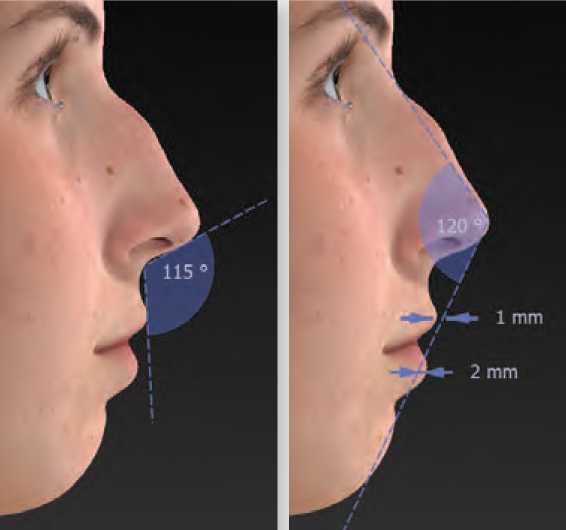
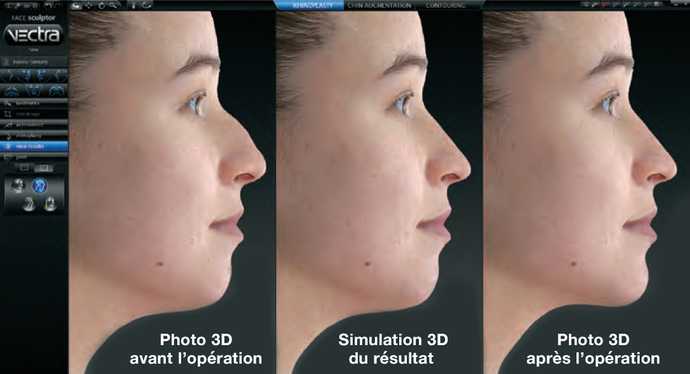
Dr. Kron uses 3D digital photography tools (Vectra XT) to perform simulations of the result of a rhinoplasty, with quantitative measurements of the volumes and dimensions to be changed.
In some cases, patients who wish to undergo a revision rhinoplasty prefer to change surgeons. If possible, you should retrieve your medical records, which can be complicated when the procedure was performed abroad. The most useful data are the previous operative report(s) as well as the initial photos of your nose.
The procedure:
As with a primary rhinoplasty, the procedure is performed under general anesthesia, almost always on an outpatient basis.
A revision rhinoplasty is often longer than a primary rhinoplasty. It is not uncommon for a revision rhinoplasty to last more than two or three hours. The surgical steps are indeed more complex and delicate. The time needed to prepare a DCF graft in the case of an augmentation rhinoplasty must also be considered.
During the procedure, the surgeon will pay particular attention to tissue changes caused by the first operation. They may need to adapt the planned surgical steps based on the situation observed.
Recovery after a revision rhinoplasty
Recovery after a revision rhinoplasty is not very painful. The pain and discomfort felt are similar to those of a primary rhinoplasty.
Recovery is identical to that of a primary rhinoplasty (appearance of edema, breathing difficulty) but may last a little longer.
The scars from a revision rhinoplasty are often "invisible," as the incisions are made within the nostrils (referred to as the closed approach). Sometimes, a small skin scar at the base of the columella is necessary (referred to as the open approach).
When can the result be observed?
The result is not visible immediately after the operation. Indeed, the operation causes edema that masks the result when leaving the clinic.
This edema gradually decreases over the following weeks, revealing a progressive result. However, it takes several months for the more subtle changes to the nose to become apparent.
To observe the final result of the procedure, you must wait a minimum of 1 year, sometimes two years in the case of multiple procedures, thick skin, or the open approach. The edema will have then completely disappeared and the tissues will have regained their full suppleness.
The result of a revision rhinoplasty is often very satisfying for patients, especially for those who felt self-conscious after a rhinoplasty whose result had disappointed them.
Learn more
> Rhinoplasty: cosmetic nose surgery
