
Pregnancy can cause several types of changes to a woman's body: the breasts lose firmness, the abdominal area stretches, and stubborn fat deposits and stretch marks appear. Not all women are equal when it comes to these after-effects: for some they will gradually disappear, for others they will be more persistent and can cause self-consciousness.
The "mommy makeover" combines several cosmetic surgery techniques that correct these after-effects. Among these post-pregnancy surgical techniques are the breast lift, tummy tuck and liposuction. Aesthetic medicine techniques can also be effective for correcting certain after-effects of motherhood.
What is a "mommy makeover"?
Coined in the United States, this expression does not refer to a single cosmetic surgery technique, but to a combination of techniques that correct all the after-effects of pregnancy on a mother's body. While this expression has been increasingly used in recent years, it refers to cosmetic surgery procedures that have long proven their effectiveness and safety.
What after-effects on the body after motherhood?
Being a mother involves changes to the body linked to pregnancy, childbirth and breastfeeding. The breasts and abdomen are the areas most affected:
- The breasts become saggier, lose firmness and, in some cases, "deflate" (lose a more or less significant amount of volume).
- The abdomen stretches and may sag.
- The abdominal area becomes lax.
- In some cases, diastasis of the rectus abdominis muscles may be observed (excessive gap between the vertical abdominal muscles).
- Fat deposits, notably around the saddlebags, appear or become more pronounced. They are often difficult to lose despite a balanced diet and physical activity.
- In the genital area, the labia minora can become more lax and the vagina more stretched.
While these changes are normal and explained by physiological factors, they can cause self-consciousness in some mothers who no longer feel at home in their bodies and who wish to regain their pre-pregnancy silhouette as much as possible.
Every woman and every pregnancy is different. Some women will be fortunate to have few after-effects, some will quickly regain their pre-pregnancy silhouette, while others will struggle to lose fat deposits and will experience significant breast ptosis as well as significant laxity of the abdominal area.
Combined procedures to meet women's expectations after motherhood
The techniques combined as part of a "mommy makeover" vary depending on the patient's anatomy, wishes, and how her body has changed after one or more pregnancies.
The expression "mommy makeover" or "post-partum package" generally refers to the combination of breast cosmetic surgery procedures (breast lift and/or breast augmentation) and body-contouring cosmetic surgery procedures (liposuction, tummy tuck). In some cases, the procedures performed also include cosmetic buttock surgery and/or intimate surgery (labiaplasty).
What about aesthetic medicine after pregnancy?
Most often, a mommy makeover combines cosmetic surgery procedures. However, there are aesthetic medicine techniques that meet the expectations of young mothers without involving anesthesia or hospitalization.
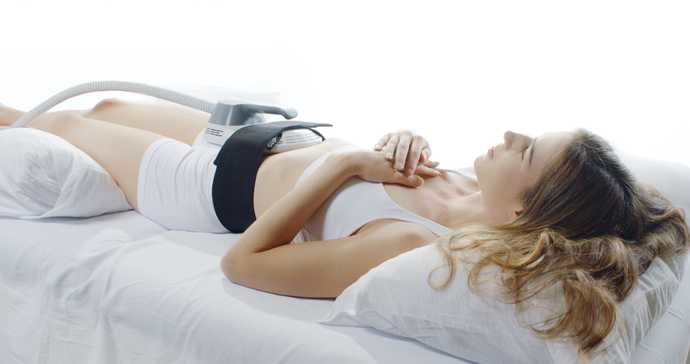
Non-invasive fat-removal and body muscle-toning techniques (such as CoolSculpting and EMSculpt) correct excess fat that is difficult to lose after pregnancy, tone the silhouette's muscles, and reduce diastasis of the rectus abdominis.
There are also skin treatments (lasers, peels, mesotherapy, dynamic phototherapy, micro-needling radiofrequency (Keybody-Skin)) that tone the skin and reduce stretch marks.
Toning sagging breasts after pregnancy
The effects of motherhood and breastfeeding on the breasts
Along with the abdomen, the breasts are the other part of the body that mainly bears the after-effects of motherhood. Pregnancy and breastfeeding can cause the breasts to stretch, resulting in breast sagging (referred to as "breast ptosis").
This breast sagging can also be accompanied by the appearance of stretch marks, or even a decrease in breast volume. The breasts become more or less "saggy" or "deflated".
Breast lift
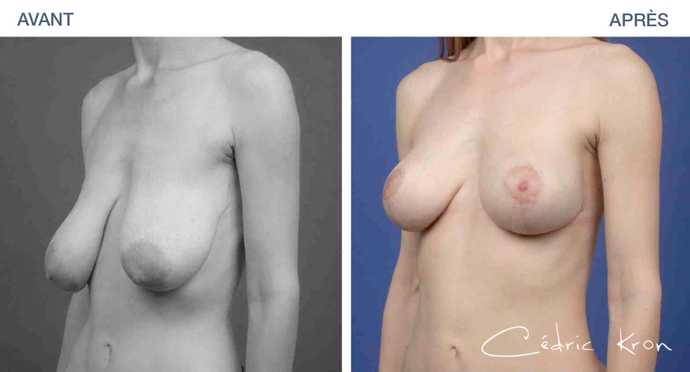
To correct the effects of pregnancy on the breasts, the most suitable procedure is often a breast ptosis correction. A ptosis correction is sometimes called a "breast lift" or "breast rejuvenation" (the surgical term being "mastopexy"). Its goal is to regain a youthful, harmonious breast silhouette, proportionate to the rest of the body, and to lift the breasts so they no longer sag.
The principle of a breast lift is to reshape the breast contour to give it a harmonious shape. To do this, the surgeon lifts the breast tissue, then adapts the skin envelope to the new contour and repositions the areola-nipple complex correctly. Breast volume does not change in a pure breast lift. It is sometimes combined with a breast reduction if the breasts are too large, referred to as a reduction mastopexy. When breast volume has become too small, it is sometimes combined with breast augmentation (see below).
Since a certain amount of skin is removed, this procedure leaves a scar. The size of the scar varies depending on the degree of ptosis and the amount of excess skin.
Breast augmentation with implants or lipofilling
If breast sagging is accompanied by a significant loss of volume, a ptosis correction can be combined with a surgical step aimed at restoring the volume lost following pregnancy.
Breast augmentation can be performed by placing breast implants or as part of breast lipofilling.
Breast lipofilling (or breast fat grafting) is a cosmetic surgery procedure that involves injecting fat cells from the patient's own body. It is a genuine autograft of the patient's own fat cells, which remain alive. Breast lipofilling is a cosmetic breast surgery technique that achieves a lasting, natural result with virtually invisible scars (2 mm long). The volume achieved with lipofilling is generally less than what implant placement allows.
When a breast lift is combined with implant augmentation, this is referred to as an implant-mastopexy. This procedure involves placing breast implants to increase breast volume and performing a breast lift in the same procedure, to correct residual ptosis and properly reposition the areolas.
Removing fat gained during pregnancy
Pregnancy always leads to weight gain: an average of 11 to 15 kilos. This weight gain is notably explained by the body building up fat reserves. This fat store will be used at the end of pregnancy (during the baby's rapid growth) and during breastfeeding. These reserves represent about a quarter of the weight gained during pregnancy.
Liposuction after pregnancy
The body gradually eliminates this fat in the months following childbirth and breastfeeding. However, complete elimination of this fat store is not always straightforward. Even while breastfeeding, eating a balanced diet, and exercising regularly, many women retain unsightly fat rolls.
To remove fat deposits localized around the abdomen and/or saddlebags (hips, thighs and buttocks), liposuction can be used. This is a very effective technique for removing localized excess fat and reshaping the body.
If weight gain has caused skin stretching, liposuction may need to be combined with skin-redraping surgery (tummy tuck, buttock lift) to achieve the best possible result.
Medical alternatives: CoolSculpting and EMSculpt
CoolSculpting and EMSculpt, possibly combined with XBody sessions, can be interesting non-surgical alternatives for treating localized fat deposits in young mothers. A body-contouring diagnostic reviews the non-surgical treatments best suited to your needs.
Firming the abdomen and abdominal area
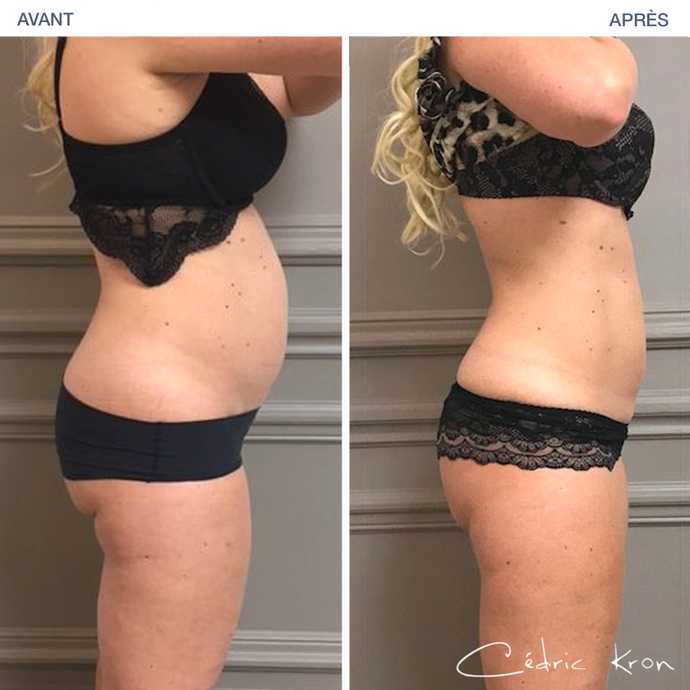
The after-effects of pregnancy are particularly visible on the abdomen. The skin undergoes significant stretching, which can lead not only to stretch marks, but also to sagging skin and muscles. This sagging of the abdominal area can also be accompanied by localized fat deposits, notably around the navel.
Tummy tuck
A tummy tuck (or abdominal dermolipectomy, or abdominoplasty) is an abdominal surgery procedure that is the most suitable therapeutic solution for correcting the appearance of the abdomen when it shows excess skin, fat, or even muscular sagging (diastasis).
A tummy tuck tightens the abdominal skin, strengthens the abdominal area and slims the waist. The goal is to achieve a firmer abdomen while preserving its natural appearance.
Correcting post-partum diastasis
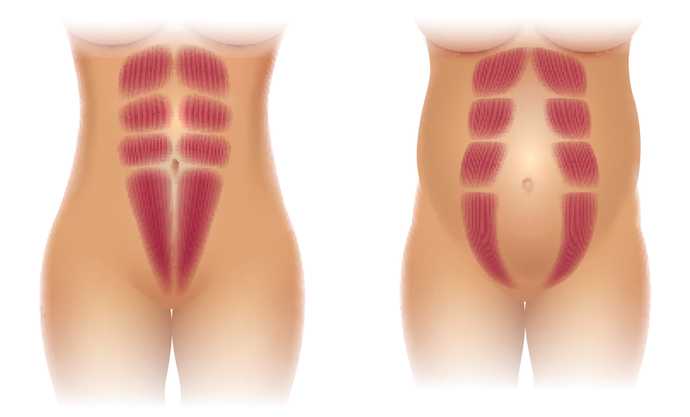
During pregnancy, the rectus abdominis muscle shifts away from the midline of the abdomen to make room for the uterus and fetus to develop. After childbirth, the uterus gradually returns to its place and the two parts of the rectus abdominis come back together.
In some cases, the stretching of the rectus abdominis muscle is particularly significant and causes separation. This is referred to as "rectus abdominis diastasis".
Diastasis not only causes abdominal sagging, which can appear droopy and soft, but can also cause pain and discomfort in daily or sports activities when the abdominal muscles contract.
Diastasis can be treated surgically during a tummy tuck. Diastasis can also be reduced with EMSculpt sessions, an innovative device that significantly reduces post-pregnancy separation of the abdominal muscles and tightens the abdominal wall.
Precautions to take before post-pregnancy cosmetic surgery
The surgical techniques used in a "mommy makeover" have proven their effectiveness and safety. However, it is important to keep in mind that these are surgical procedures that involve recovery time and require anesthesia.
Particularly in the case of a young mother, the proper unfolding of the recovery and rest period essential after the procedure must also be considered.
When can a "mommy makeover" be considered?
- You should wait at least six months after a pregnancy before considering a surgical procedure.
- The procedure can also be performed several years after a pregnancy.
- You should wait until the end of the breastfeeding period, at least three months.
- It is important that the patient has reached a stable weight.
- The patient must show no risk of bleeding (normal blood and coagulation tests).
- It is preferable not to plan another pregnancy. If this is the case, it is better to wait until after the next pregnancy before undergoing a mommy makeover.
- You should have realistic expectations regarding the result.
A single procedure or several successive operations?
The expression "mommy makeover" often refers to combining several surgical procedures in a single operative session.
While this combination achieves a very significant result, a faster final outcome, and avoids another hospitalization, it is nonetheless important to ensure that the procedure is not too long. To avoid the risks inherent to a surgical procedure (related to anesthesia, bleeding or phlebitis), the operative time should preferably not exceed 4 or 5 hours.
If the desired procedures cannot be performed within this timeframe, it is preferable to consider several procedures spaced 3 to 4 months apart. A mommy makeover combining a breast lift with liposuction can generally be performed in a single operation, as can a combination with a tummy tuck.
Dr. Kron will recommend what is best for you in terms of benefits/risks. Only a consultation with the surgeon will allow for a thorough review of your expectations, the surgical procedures to be performed, and the treatment approach best suited to your case.
Recovery after a mommy makeover
- Recovery depends on the extent of the treatment and the number of areas treated.
- Postoperative pain is moderate and can be limited with simple painkillers. It is more significant in diastasis corrections and extensive liposuction procedures.
- Bruising and edema appear in the treated areas. These side effects gradually disappear in the days that follow.
- If a tummy tuck is performed, wearing a compression garment will be recommended, along with anticoagulant treatment prescribed for 15 days.
- Hospitalization can be on an outpatient basis or may require an overnight stay after the procedure.
- Generally speaking, 3-4 weeks of recovery should be expected, with about 5-10 days of complete rest.
- Return to sport can be gradual after 2-6 weeks depending on the type of activity. Dr. Kron, himself a federal aikido instructor, along with the practice's two state-certified sports coaches, Emilie and Ylane, will be able to perfectly advise and adapt to you as you resume your sports activities.
